Tree Weight Calculator – Estimate Tree Weight & Biomass

🌳⚖️

Tree Weight Calculator

Estimate the approximate weight of a tree using trunk diameter, tree height, wood density, and moisture condition.

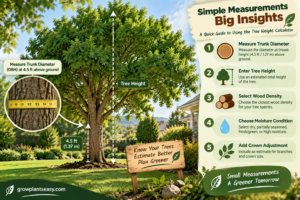
Measure trunk diameter at about 4.5 ft (1.37 m) above the ground.
Choose the closest density category for the tree species. Wood density varies significantly between species.
Fresh living trees contain substantial water, so their green weight can be considerably greater than dry wood weight.
Adds an approximate allowance for branches and above-ground crown biomass.
🌳 Estimated Tree Weight
—
—
🪵
Estimated Trunk Volume —
⚖️
Estimated Dry Biomass —
💧
Moisture-Adjusted Weight —
🌿
Including Crown —
Approximate Weight Scale
Light
Medium
Heavy
Very Heavy
🌳 Beginner Tip: Measure DBH around 4.5 feet (1.37 m) above ground. If you only know trunk circumference, divide the circumference by π (3.1416) to estimate diameter.
⚠️ Important: This is a simplified educational estimate. Real tree biomass varies with species, trunk taper, branching structure, hollows, moisture content, crown size, and growth conditions. Do not use this calculator for tree removal, rigging, crane capacity, structural engineering, transport loading, or other safety-critical decisions.
Have you ever looked at a large tree and wondered how much it actually weighs? Measuring a living tree directly isn’t practical, but its approximate weight can be estimated using measurements such as trunk diameter, height, wood density, and moisture condition. Our Tree Weight Calculator gives you a quick estimate of tree weight and above-ground biomass using these factors.

If you enjoy working with numbers while planning your garden or understanding your trees better, explore more useful plant and tree calculators on Grow Plants Easy.

Tree Weight Calculator – Estimate Tree Weight & Biomass

⚖️ What Is a Tree Weight Calculator?

A Tree Weight Calculator is an estimation tool that uses basic tree measurements to approximate the weight of a standing tree.

The calculator considers:

  • Trunk diameter (DBH)
  • Approximate tree height
  • Wood density
  • Moisture condition
  • Branch and crown adjustment

It then provides the estimated weight in pounds, kilograms, US tons, and metric tons, depending on the size of the tree.

Because tree structure varies considerably between species and individual trees, the result should be treated as an approximate biomass estimate rather than an exact weight.

Check: Tree Canopy Calculator & Tree Fertilizer Calculator

📏 How to Use the Tree Weight Calculator

Using the calculator only takes a few steps.

1. Measure Trunk Diameter

Measure the tree’s diameter at breast height (DBH), conventionally taken at about 4.5 feet (1.37 meters) above ground.

Enter the diameter in inches or centimeters.

2. Enter Tree Height

Estimate the total height of the tree and select either feet or meters.

3. Select Wood Density

Choose the wood-density category that most closely matches your tree. Density can differ considerably among tree species.

4. Choose Moisture Condition

Select whether the wood is dry, partially seasoned, fresh/green, or has a high moisture level.

5. Select Crown Size

Choose an approximate branch and crown adjustment. A larger crown generally contains more above-ground biomass than a smaller crown.

Click Calculate Tree Weight to view the estimate.

How to Estimate Tree Weight

📊 Tree Weight Factors Explained

Factor Why It Matters
DBH Helps estimate trunk size and volume
Tree Height Taller trees generally contain more wood
Wood Density Dense wood weighs more for the same volume
Moisture Living green wood contains substantial water
Crown Size Branches add to total above-ground biomass
Species Tree structure and wood properties vary by species

These variables explain why two trees with similar heights can still have very different estimated weights.

Also check: Tree Age Calculator & Lemon Tree Watering Calculator

💧 Green Tree Weight vs. Dry Wood Weight

A freshly cut or living tree can weigh considerably more than the same wood after drying because living wood contains water.

The calculator therefore separates dry biomass from moisture-adjusted weight.

The actual moisture content varies according to factors such as species, season, tree condition, and the part of the tree being measured. The moisture options in this calculator are therefore broad estimating factors rather than laboratory measurements.

❓ Frequently Asked Questions

1. How much does a tree weigh?

There is no single average weight for all trees. Small trees may weigh relatively little, while large mature trees can contain several tons of biomass. Species, dimensions, density, moisture, and crown structure all matter.

2. Can you calculate tree weight from diameter?

Diameter is useful, but diameter alone is not enough for a good estimate. Height, wood density, moisture, and tree structure also affect total weight.

3. What does DBH mean?

DBH means Diameter at Breast Height. It is a standard forestry measurement of trunk diameter, commonly measured approximately 4.5 feet or 1.37 meters above ground.

4. Does the calculator include tree roots?

No. This calculator is intended to provide an approximate above-ground weight estimate based mainly on the trunk and an allowance for branches/crown biomass. Underground root biomass is not included.

5. Does a wet tree weigh more than a dry tree?

Yes. Water contributes to the mass of fresh wood, so freshly cut or living green wood generally weighs more than the same wood after drying.

6. Is this calculator accurate enough for tree removal?

No. Do not use this estimate for rigging, cranes, transport loads, structural calculations, or tree-removal safety decisions. Those situations require professional assessment and more precise information.

🏁 Final Thoughts

The Tree Weight Calculator provides an easy way to explore how trunk diameter, tree height, wood density, moisture, and crown size influence estimated tree weight.

It is particularly useful for general tree-weight and biomass estimates, but remember that every tree has a unique structure. For scientific forestry measurements or safety-critical work, species-specific equations and professional assessment are more appropriate.

Comments

No comments yet. Why don’t you start the discussion?

Leave a Reply

Your email address will not be published. Required fields are marked *