
🌳 Tree Planting Calculator
Planning a tree planting project becomes much easier when you know how many trees will fit in the available space. Our Tree Planting Calculator estimates the number of trees needed based on your planting area, spacing between trees, row spacing, and extra replacement allowance.
Simply enter your area dimensions and preferred tree spacing to get an instant estimate. You can also explore our practical garden and landscape planning tools for other planting and outdoor calculations.
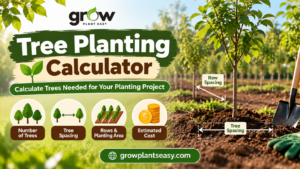
🌱 How to Use the Tree Planting Calculator
Using the calculator is simple:
- Enter the length and width of your planting area.
- Select feet or meters.
- Enter the desired spacing between trees.
- Enter the spacing between planting rows.
- Select an extra tree allowance from 0% to 20%.
- Optionally enter the cost per tree.
- Click Calculate Trees Needed.
The result shows your base tree quantity, additional replacement trees, final number of trees, trees per acre, area per tree, and estimated cost.
Check: Firewood Calculator & Vegetable Yield Calculator
📐 How Is the Number of Trees Calculated?
The calculator first determines the total planting area. It then calculates how much space is allocated to each tree using:
Area Per Tree = Tree Spacing × Row Spacing
The total planting area is divided by the area required for each tree to estimate the base number of trees.
If you select an extra allowance, additional trees are added to account for potential losses, replacements, or planting adjustments.
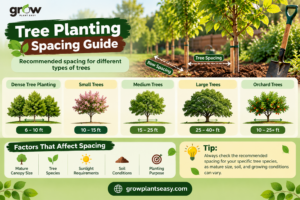
🌲 Tree Spacing Guide
The right spacing varies considerably depending on the tree species and purpose of your planting project.
| Planting Type | Example Spacing |
|---|---|
| Dense Tree Planting | 6–10 ft |
| Small Trees | 10–15 ft |
| Medium Trees | 15–25 ft |
| Large Trees | 25–40+ ft |
| Orchard Trees | 10–25+ ft |
These are general examples only. Always check the mature canopy size and recommended spacing for the particular species you plan to grow.
💰 Estimating Tree Planting Cost
The calculator also includes an optional cost per tree field. Enter the approximate purchase price of one tree, and the tool will multiply it by the final number of trees required.
For example, if your project requires 100 trees and each tree costs $15, the estimated tree purchase cost would be $1,500.
Remember that actual project costs may also include delivery, labor, soil preparation, mulch, irrigation, stakes, guards, and ongoing maintenance.
Also check: Grass Seed Calculator & Tree Growth Calculator
❓ Tree Planting Calculator FAQs
1. What is a Tree Planting Calculator?
A Tree Planting Calculator estimates how many trees can be planted within a specific area. It uses the planting area’s dimensions along with tree and row spacing to calculate the approximate quantity required.
2. How do I calculate how many trees I need?
Calculate the total planting area and divide it by the space allocated to each tree. Our calculator performs this calculation automatically and can also include extra trees for replacements.
3. How far apart should trees be planted?
Spacing depends on the tree species, mature size, and planting purpose. Small trees may require considerably less space than large shade trees, so always check the recommended spacing for your specific species.
4. Why should I order extra trees?
Some newly planted trees may fail to establish or may need replacement. Adding a small extra allowance can help ensure you have enough trees to complete the intended planting layout.
5. Can I calculate trees per acre?
Yes. The calculator estimates trees per acre using your selected tree spacing and row spacing. This is especially useful for orchards, plantations, reforestation projects, and larger properties.
🌿 Final Thoughts
A Tree Planting Calculator provides a quick way to estimate the number of trees required for a landscape, orchard, plantation, or larger planting project.
Use your actual planting area and appropriate spacing for the tree species, then include a small replacement allowance if needed. For the best long-term results, consider the tree’s mature size and growing requirements before deciding on the final spacing.