
💧 Irrigation Pump Sizing Calculator
Estimate the pump horsepower (HP) required for your irrigation system based on flow rate, total dynamic head (TDH), pipe length, elevation, irrigation type, and pump efficiency.
Choosing the correct irrigation pump is one of the most important steps when designing an efficient watering system. A pump that is too small may not deliver enough water pressure, while an oversized pump can waste energy, increase operating costs, and reduce system efficiency.
Explore more irrigation calculators, landscaping tools, and plant care guides on Grow Plants Easy to design efficient watering systems and keep your garden thriving.
Many homeowners, farmers, and landscapers ask:
👉 “What size irrigation pump do I need?”
👉 “How do I calculate irrigation pump horsepower?”
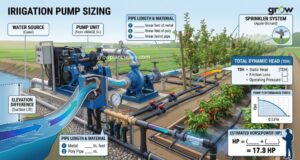
The answer depends on several factors, including your required water flow rate, total dynamic head (TDH), pipe length, elevation difference, irrigation system type, and pump efficiency.
That’s where this Irrigation Pump Sizing Calculator helps.
This tool estimates:
- Recommended pump horsepower (HP)
- Water flow rate conversion
- Total dynamic head (TDH)
- Friction loss from pipe length
- Pump size recommendation
Whether you’re installing a drip irrigation system, sprinkler network, or micro sprinkler setup, this calculator helps you select a pump that matches your system requirements.
How to Use the Irrigation Pump Sizing Calculator
Using the calculator is easy.
Enter:
- Water flow rate (GPM or LPM)
- Total Dynamic Head (TDH)
- Pipe length
- Elevation difference
- Irrigation type
- Pump efficiency
After calculating, you’ll receive:
- Estimated pump horsepower (HP)
- Total system head
- Water flow information
- Pump efficiency used
- Recommended pump size
These estimates help you choose a pump capable of delivering the required water pressure and flow.
Check these posts - General Hydroponics Calculator & Paver Base Calculator
What This Calculator Helps You With
Estimate Pump Horsepower
The calculator estimates the horsepower needed to move water efficiently through your irrigation system.
Account for Elevation Changes
Water must be lifted uphill in many irrigation systems. Elevation increases the total head and affects pump size.
Include Pipe Friction Loss
Longer pipes create friction, reducing pressure. The calculator estimates this additional head loss.
Compare Irrigation Systems
Different irrigation methods require different operating pressures.
The calculator adjusts recommendations for:
- Drip irrigation
- Micro sprinklers
- Sprinkler systems
Improve Energy Efficiency
Choosing the right pump helps reduce electricity costs while maintaining reliable irrigation performance.
⚡ Pump Efficiency
No irrigation pump is 100% efficient.
Most irrigation pumps operate between:
| Pump Type | Typical Efficiency |
|---|---|
| Small Residential Pump | 50–65% |
| Quality Irrigation Pump | 65–80% |
| Commercial Pump | 80–90% |
Higher efficiency means less energy is wasted while delivering the same amount of water.
🌿 Tips for Choosing the Right Pump
For the best results:
- Select a pump slightly above the calculated requirement rather than below it.
- Use larger pipe diameters to reduce friction loss where practical.
- Minimize unnecessary pipe bends and fittings.
- Regularly clean filters to maintain flow.
- Follow the manufacturer’s performance curves before purchasing a pump.
These steps help improve reliability and extend pump life.
Related Posts
❓ FAQs – Irrigation Pump Sizing Calculator
1. What is Total Dynamic Head (TDH)?
TDH is the total resistance the pump must overcome, including elevation, pipe friction, and pressure requirements.
2. Why does pipe length affect pump size?
Longer pipes create more friction, increasing pressure loss and requiring additional pump power.
3. Does irrigation type affect pump size?
Yes. Drip irrigation generally requires less pressure than sprinkler systems, so the required pump size may differ.
4. What pump efficiency should I use?
If you’re unsure, 70% efficiency is a reasonable estimate for many residential and light commercial irrigation pumps.
5. Should I buy a pump exactly equal to the calculated horsepower?
It’s generally recommended to choose the next standard pump size above the estimate to provide a safety margin and accommodate minor future system changes.
6. Can this calculator be used for agricultural irrigation?
Yes. It provides a useful estimate for home gardens, orchards, farms, greenhouses, and many agricultural irrigation systems. Always verify the final pump selection using the manufacturer’s pump performance chart.
Conclusion
The Irrigation Pump Sizing Calculator helps estimate the pump horsepower needed based on water flow rate, total dynamic head, pipe length, elevation difference, irrigation type, and pump efficiency. Selecting the correct pump improves water distribution, reduces energy consumption, and helps your irrigation system operate efficiently.
Whether you’re designing a small backyard drip system or a larger sprinkler network, using the proper pump size is an important step toward reliable and cost-effective irrigation.