
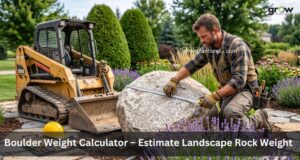
🪨 Boulder Weight Calculator
Estimate the weight of a boulder using its dimensions and rock type.
Whether you’re planning a landscaping project, building a retaining wall, installing decorative rocks, or transporting large stones, knowing a boulder’s approximate weight is essential. Estimating weight helps you choose the right equipment, trailer, or machinery and reduces the risk of damage or accidents.
Explore more landscaping calculators, construction planning tools, and garden project guides on Grow Plants Easy to make outdoor projects easier, safer, and more accurate.
Many homeowners and contractors ask:
👉 “How much does a boulder weigh?”
👉 “How do I calculate boulder weight?”
The answer depends on the boulder’s dimensions and the type of rock.
That’s where this Boulder Weight Calculator helps.
This tool estimates:
- Boulder weight
- Approximate volume
- Weight in pounds or kilograms
- Weight in tons
- Rock density adjustments
Whether you’re moving a decorative landscape boulder or planning a construction project, this calculator provides a quick and reliable estimate.
🪨 How to Use the Boulder Weight Calculator
Using the calculator is simple.
Enter:
- Length
- Width
- Height
- Measurement unit
- Rock type
After calculating, you’ll receive:
- Estimated boulder weight
- Approximate weight in tons
- Boulder volume
- Helpful planning tips
The estimate is useful for landscaping, excavation, hauling, and equipment selection.
Check these posts: Pergola Rafter Spacing Calculator & Mango Tree Watering Calculator
⚖️ What This Calculator Helps You With
Estimate Boulder Weight
The calculator estimates weight using the dimensions you provide and the selected rock density.
Plan Transportation
Knowing the approximate weight helps determine:
- Trailer size
- Truck capacity
- Crane requirements
- Forklift capacity
- Excavator size
Reduce Safety Risks
Lifting a rock heavier than expected can damage equipment or create dangerous working conditions. Estimating the weight beforehand improves safety.
Compare Different Rock Types
Different rocks have different densities.
For example:
- Granite is heavier than limestone.
- Basalt is one of the densest common landscape rocks.
- Marble generally weighs less than granite.
Selecting the correct rock type improves the estimate.

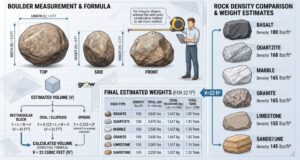
🪨 Common Rock Densities
| Rock Type | Approximate Density |
|---|---|
| Granite | 165 lb/ft³ |
| Basalt | 170 lb/ft³ |
| Quartzite | 160 lb/ft³ |
| Sandstone | 155 lb/ft³ |
| Limestone | 150 lb/ft³ |
| Marble | 145 lb/ft³ |
Actual density can vary depending on the specific rock and moisture content.
Also check - Drip Irrigation Calculator
❓ FAQs – Boulder Weight Calculator
1. How accurate is a boulder weight calculator?
The calculator provides an estimate based on dimensions and average rock density. Actual weight may vary because natural boulders have irregular shapes.
2. What is the heaviest common landscape rock?
Basalt is generally one of the heaviest common landscaping rocks because of its high density.
3. Why do different rocks weigh different amounts?
Each rock type has a different mineral composition and density, which affects its weight.
4. Can I use this calculator for decorative garden rocks?
Yes. The calculator works well for decorative boulders, retaining wall stones, and many other landscaping projects.
5. Should I add extra lifting capacity?
Yes. Always choose lifting or transportation equipment with a capacity that exceeds the estimated boulder weight to provide a safe margin.
🪨 Conclusion
The Boulder Weight Calculator helps you estimate the weight, volume, and approximate tonnage of a boulder using its dimensions and rock type. While natural stones vary in shape and density, this calculator provides a practical estimate for landscaping, construction, transportation, and equipment planning.
Whether you’re placing a decorative garden boulder or moving a large construction stone, estimating the weight beforehand helps you work more safely and efficiently.