
💡 Grow Light Calculator
Growing plants indoors can be challenging when natural sunlight is limited. A Grow Light Calculator helps you estimate the total LED wattage, number of lights, daily lighting time, and approximate electricity cost needed for your growing area.
Enter your growing area, plant light requirement, grow light wattage, daily hours, and electricity rate to get a quick estimate. For more practical plant-growing calculations, you can also explore our collection of helpful gardening tools.
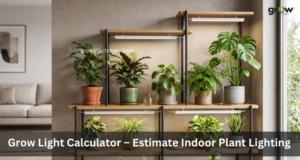
🌱 How to Use the Grow Light Calculator
Using the calculator is simple:
- Enter the length and width of your growing area.
- Select whether your measurements are in feet or meters.
- Choose the plant’s light requirement.
- Enter the wattage of each LED grow light.
- Enter how many hours you plan to run the light each day.
- Add your electricity cost per kWh.
- Click Calculate Grow Light Needs to see the estimated requirements.
The result shows recommended total wattage, number of lights, daily energy use, and estimated monthly electricity cost.
Check: Black Walnut Tree Value Calculator & Corn Yield Calculator
🔢 How Is Grow Light Wattage Calculated?
The calculator first determines the total growing area in square feet. It then uses an approximate wattage guideline based on the plant’s light requirement.
| Plant Light Requirement | Approx. LED Wattage |
|---|---|
| Low Light Plants | 15 W/sq ft |
| Medium Light Plants | 20 W/sq ft |
| High Light / Flowering Plants | 30 W/sq ft |
| Very High Light / Fruiting Plants | 40 W/sq ft |
The estimated total wattage is then compared with the wattage of each grow light to determine how many lights may be needed.
Electricity use is estimated from the actual light wattage and daily runtime. The monthly cost is based on approximately 30 days of operation.
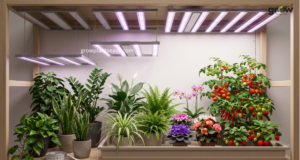
💡 What Affects Grow Light Requirements?
Several factors can change how much artificial light your plants need.
| Factor | Why It Matters |
|---|---|
| Growing Area | Larger areas require more light coverage |
| Plant Type | Low-light and high-light plants have different requirements |
| Light Wattage | Determines the power used by each light |
| Daily Runtime | Longer operation increases energy consumption |
| Mounting Height | Light intensity decreases as the light is moved farther away |
| PPFD | Helps measure the amount of usable light reaching plants |
Wattage is useful for a quick estimate, but it does not directly tell you how much usable light reaches the leaves. PPFD and light coverage are more useful when choosing a grow light for specific plants.
Check: Bush Removal Cost Calculator & Tree Leaves Calculator
❓ Grow Light Calculator FAQs
1. What is a Grow Light Calculator?
A Grow Light Calculator estimates the approximate lighting wattage needed for an indoor growing area. It can also estimate the number of lights, daily energy consumption, and monthly electricity cost.
2. How many watts of grow light do I need?
The required wattage depends on the growing area and plant light requirements. Low-light plants generally need less supplemental lighting than flowering or fruiting plants. The calculator provides an approximate starting point based on these factors.
3. Is grow light wattage the same as light intensity?
No. Wattage measures how much electrical power the light consumes, while light intensity describes how much usable light reaches the plants. PPFD is generally more useful for evaluating plant lighting.
4. How long should I leave a grow light on?
The ideal schedule varies by plant type and growth stage. A consistent daily schedule is generally more useful than randomly changing the lighting time. Plants should also receive an appropriate dark period.
5. Can I use a grow light for flowering plants?
Yes. Flowering plants often require stronger light than many foliage plants. When choosing a grow light, consider its coverage and PPFD information rather than relying only on wattage.
🌱 Final Thoughts
A Grow Light Calculator gives you a quick way to estimate the lighting requirements for an indoor growing space. By entering your area, plant type, light wattage, daily runtime, and electricity rate, you can estimate the number of lights and potential energy cost.
Use the result as a starting point, then check the grow light manufacturer’s PPFD and coverage specifications for a more precise setup.