
🌿 Liquid Fertilizer Calculator
Calculate how much liquid fertilizer you need for your plants, garden beds, containers, or lawns.
Liquid fertilizers provide plants with nutrients in a fast and efficient form, making them popular for houseplants, flowers, vegetables, lawns, and garden beds. However, using too much fertilizer can damage roots and leaves, while using too little may limit plant growth.
Explore more gardening calculators, plant care tools, and growing guides on Grow Plants Easy to help your plants, flowers, vegetables, and lawns thrive year-round.
Many gardeners ask:
👉 “How much liquid fertilizer should I mix with water?”
The answer depends on the fertilizer concentration, water volume, plant type, and feeding schedule.
That’s where this Liquid Fertilizer Calculator helps.
This tool estimates:
- Liquid fertilizer mixing ratios
- Fertilizer needed per gallon of water
- Fertilizer dilution rates
- Feeding strength recommendations
- Fertilizer amounts for different plant types
🌱 How to Use the Liquid Fertilizer Calculator
Using this calculator is quick and simple.
Enter:
- Plant type
- Fertilizer type
- Mixing rate
- Water amount
After calculating, you’ll instantly receive:
- Fertilizer required
- Tablespoon conversion
- Water-to-fertilizer ratio
- Feeding strength rating
- Fertilizer application tips
This helps eliminate guesswork and ensures proper nutrient delivery.
Check this post - Lawn Mowing Cost Calculator & How Much Mulch You Need
🌿 What This Calculator Helps You With
Calculate Accurate Fertilizer Ratios
Different fertilizers require different dilution rates. This calculator determines the correct amount of fertilizer based on the amount of water being used. Accurate mixing helps plants receive nutrients without overfeeding.
Prevent Overfertilization
Applying excessive fertilizer can cause fertilizer burn, yellow leaves, and root damage. The calculator helps gardeners use safer nutrient concentrations for healthier plants.
Convert Measurements Easily
Many fertilizer labels use teaspoons, tablespoons, ounces, or gallons. This calculator simplifies measurements and provides easy-to-understand mixing recommendations.
Improve Plant Growth
Plants require balanced nutrients for healthy roots, foliage, flowers, and fruits. Proper fertilizer mixing helps maximize growth while reducing nutrient deficiencies.
Support Different Plant Types
Houseplants, vegetables, flowers, lawns, and shrubs often have different feeding requirements. Using the correct fertilizer concentration improves overall plant performance.
Also check – Artificial Turf Cost Calculator & Seed Germination Calculator
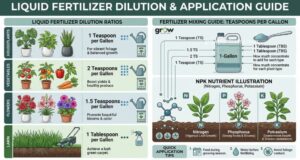
📊 Common Liquid Fertilizer Mixing Rates
| Mixing Rate | Fertilizer Needed |
|---|---|
| 1 Gallon of Water | 1–2 Teaspoons |
| 2 Gallons of Water | 2–4 Teaspoons |
| 5 Gallons of Water | 5–10 Teaspoons |
| 10 Gallons of Water | 10–20 Teaspoons |
Always follow manufacturer recommendations whenever available.
❓ FAQs – Liquid Fertilizer Calculator
1. How much liquid fertilizer should I use per gallon of water?
Most liquid fertilizers recommend between 1 and 2 teaspoons per gallon, but the exact amount depends on the product and plant type.
2. Can I use liquid fertilizer on indoor plants?
Yes. Liquid fertilizers are commonly used for houseplants because they are easy to apply and quickly absorbed.
3. How often should I fertilize plants?
Many plants benefit from feeding every 2–4 weeks during active growth, though requirements vary by species.
4. Can too much fertilizer harm plants?
Yes. Excess fertilizer can cause root damage, leaf burn, and reduced growth.
5. Is organic liquid fertilizer better?
Organic fertilizers can improve soil health and provide nutrients naturally, but the best option depends on plant needs and gardening goals.
🌿 Conclusion
The Liquid Fertilizer Calculator helps gardeners accurately determine fertilizer-to-water ratios for a wide variety of plants. By using proper dilution rates, you can provide essential nutrients while avoiding common problems such as fertilizer burn and nutrient imbalances.
Whether you’re feeding houseplants, vegetables, flowers, lawns, or shrubs, this calculator makes fertilizer mixing easier, safer, and more effective for healthy plant growth throughout the growing season 🌱💧✨