
🌷 Bulb Spacing Calculator
Calculate how many flower bulbs you need and the approximate spacing between bulbs based on your planting area and desired density.
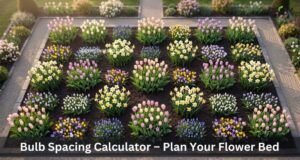
Planting bulbs at the right distance can make a big difference in how a flower bed looks once the plants start growing. If bulbs are planted too close together, they may compete for space, water, and nutrients. If they’re too far apart, the planting bed can look sparse.
Explore more gardening calculators on Grow Plants Easy to make planning your garden projects faster and easier.
Our Bulb Spacing Calculator helps you estimate how many bulbs you need for a specific planting area based on the area size and desired bulb spacing. You can also add a small percentage of extra bulbs to account for replacements or bulbs that don’t grow.
It works well for planning flower beds, borders, containers, and other garden areas where you want a consistent bulb planting pattern.
🌱 How to Use the Bulb Spacing Calculator
Using the calculator is simple. Enter the following information:
- Planting area length
- Planting area width
- Area unit
- Desired bulb spacing
- Spacing unit
- Extra bulbs for replacement
The calculator estimates the planting area, number of bulbs required, planting density, and total bulbs including your selected extra percentage.
🌷 Example
Suppose you have a 10 × 6 foot flower bed and want to plant bulbs 6 inches apart.
The calculator estimates the number of planting positions that can fit within the area and gives you an approximate bulb count.
Adding an extra percentage gives you a few additional bulbs for replacement or unexpected losses.
Check: Acres Per Hour Calculator & Tree Population Calculator
📐 What Is Bulb Spacing?
Bulb spacing is the distance between individual bulbs when they are planted.
The correct spacing depends on the bulb species, mature plant size, planting location, and the look you want to create.
Small bulbs can generally be planted closer together, while larger bulbs often need more room.
Spacing is usually measured from bulb center to bulb center, rather than from the edge of one bulb to the edge of another.
🧮 How Does the Bulb Spacing Calculator Work?
The calculator estimates how many planting positions fit into your available area.
The basic idea is:
Bulbs Needed ≈ Planting Area ÷ Spacing Area
For a square planting pattern, the spacing area is approximately:
Spacing × Spacing
For example, if bulbs are planted 6 inches apart:
6 × 6 = 36 square inches per bulb
The calculator compares this spacing area with your total planting area to estimate the number of bulbs required.
Because real gardens aren’t perfectly divisible into squares, the result should be considered an approximate planning number.

🌷 How Much Space Do Different Bulbs Need?
There isn’t one spacing recommendation for every bulb.
| Bulb Type | Typical Spacing Range* |
|---|---|
| Crocus | 2–4 inches |
| Snowdrops | 3–4 inches |
| Daffodils | 4–6 inches |
| Tulips | 4–6 inches |
| Hyacinths | 4–6 inches |
| Alliums | 6–12 inches |
| Large ornamental bulbs | 8–12+ inches |
*These are general planning ranges, not universal planting instructions. Always check the recommendations for your specific bulb variety.
Also check: Water Soluble Fertilizer Calculator & Fire Pit Block Calculator
🌷 Bulb Spacing Quick Reference
| Garden Goal | Spacing Approach |
|---|---|
| Dense flower display | Closer spacing |
| Naturalized planting | More irregular spacing |
| Formal flower bed | Even spacing |
| Container display | Closer, variety-dependent spacing |
| Large bulbs | More room |
| Small bulbs | Less room |
These are general planning concepts. Specific bulb varieties may require different spacing.
❓ FAQs – Bulb Spacing Calculator
1. How do I calculate how many bulbs I need?
Divide your planting area by the approximate area allocated to each bulb based on your desired spacing. The calculator performs this estimate for you.
2. What is the best spacing for flower bulbs?
There isn’t one spacing that works for every bulb. Smaller bulbs generally need less space, while larger bulbs often require more room.
3. Can I plant bulbs close together?
Yes, bulbs can often be planted relatively close together for a fuller flower display, provided the spacing remains appropriate for the particular variety.
4. Should bulb spacing be measured from the edge or center?
Spacing recommendations are generally interpreted as the distance between the centers of neighboring bulbs.
5. Can I use this calculator for tulips?
Yes. Enter your planting area and the spacing recommended for your tulip variety.
6. Can I use it for daffodils?
Yes. Daffodils can also be planned using the calculator, but use the spacing recommended for your specific variety.
🌸 Final Thoughts
Getting bulb spacing right is a simple step that can make your garden look much more intentional once everything begins to bloom.
The Bulb Spacing Calculator gives you a quick estimate of how many bulbs can fit into your planting area based on the spacing you choose. Use the result as a starting point, then adjust it according to the specific bulb variety, mature plant size, soil conditions, and the look you want.
Whether you’re filling a small flower bed or planning a larger spring display, a little spacing planning before planting can save you from buying too few—or far too many—bulbs. 🌷🌱