
💦 Sprinkler Layout Calculator
Estimate sprinkler head count, spacing, rows, zones, and lawn coverage.
1. Lawn Dimensions
2. System Details
🌿 Your Sprinkler Layout Estimate
📐 Layout Breakdown
This is a preliminary grid-layout estimate for a rectangular lawn. It assumes sprinkler heads are distributed evenly across the lawn area. Actual irrigation design depends on spray patterns, pressure, flow, wind, obstacles, boundaries, water supply, and manufacturer recommendations. The zone estimate uses your entered maximum heads per zone and does not verify hydraulic capacity.
Planning a sprinkler system for your lawn can feel confusing, especially when you’re unsure how many sprinkler heads you need or how far apart they should be installed. Poor sprinkler placement can leave dry patches in some areas while wasting water in others.
Our Sprinkler Layout Calculator helps estimate sprinkler head quantity, spacing, rows, irrigation zones, and approximate water flow for a rectangular lawn. Simply enter your lawn dimensions and sprinkler spray radius to get a preliminary layout estimate.
Whether you’re installing a new lawn irrigation system or improving an existing one, this tool makes planning easier. You can also explore our other garden planning calculators for help with outdoor projects.
🧮 How to Use the Sprinkler Layout Calculator
Follow these steps to estimate your sprinkler arrangement:
-
Enter your lawn length and width.
-
Select the measurement unit (feet, meters, or yards).
-
Enter the sprinkler spray radius.
-
Choose a spacing efficiency based on your desired overlap.
-
Enter the maximum number of sprinkler heads per zone.
-
Add the flow rate per sprinkler head in GPM.
-
Enter the price per sprinkler head if you want a material cost estimate.
-
Click Calculate Sprinkler Layout.
The calculator displays estimated sprinkler heads, rows, heads per row, spacing, irrigation zones, total flow, and sprinkler head cost.
Check: Garden Bed Calculator & Prodiamine Calculator
📏 How Far Apart Should Sprinkler Heads Be?
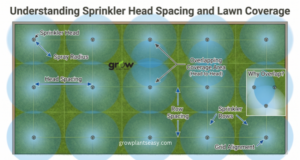
Sprinkler spacing depends on the spray radius, sprinkler type, water pressure, and the coverage pattern.
A common irrigation design principle is head-to-head coverage. This means the spray from one sprinkler should reach the neighboring sprinkler head. This helps reduce dry areas between sprinklers.
A basic spacing formula is:
Sprinkler Spacing = Spray Radius × 2
For example, if a sprinkler has a spray radius of 15 feet:
15 × 2 = 30 feet
This gives a maximum theoretical spacing of approximately 30 feet under ideal conditions. Actual spacing may need to be closer depending on wind, pressure, nozzle performance, and manufacturer recommendations.
Tips for Planning an Efficient Sprinkler System
-
Use manufacturer coverage charts to select suitable sprinkler spacing.
-
Aim for head-to-head coverage rather than relying only on maximum spray distance.
-
Avoid placing sprinkler heads where buildings, fences, or trees block the spray.
-
Group sprinklers with compatible flow rates and operating pressure.
-
Check your available water supply before deciding how many heads to operate together.
-
Use separate zones for areas with different watering requirements.
-
Adjust sprinkler schedules according to rainfall, soil type, and seasonal conditions.
Also Check: Landscape Maintenance Cost Calculator & Palm Tree Removal Cost Calculator
❓ Sprinkler Layout Calculator FAQs
1. How many sprinkler heads do I need for my lawn?
The number depends on your lawn dimensions, sprinkler spray radius, and desired spacing. Larger lawns generally require more heads, while smaller spray radii usually require closer placement. Use the calculator for a preliminary grid estimate before planning the final installation.
2. How far apart should sprinkler heads be installed?
For head-to-head coverage, sprinkler spacing is often planned around the sprinkler’s spray radius multiplied by two. However, actual spacing may need to be reduced because of wind, pressure variations, nozzle performance, and manufacturer specifications.
3. What is head-to-head sprinkler coverage?
Head-to-head coverage means water from one sprinkler reaches the location of the neighboring sprinkler. This overlap helps distribute water more evenly and reduces dry areas between sprinkler heads.
4. How many sprinkler heads can run on one zone?
There is no fixed number that works for every system. The number depends on available water flow, operating pressure, pipe size, and the flow requirements of each sprinkler. Always calculate zone capacity using the actual hydraulic specifications.
5. Does the Sprinkler Layout Calculator provide an exact installation plan?
No. It provides an estimated rectangular grid layout based on lawn dimensions and sprinkler spray radius. A final irrigation plan should also consider lawn shape, boundaries, obstacles, nozzle selection, pressure, flow rate, and manufacturer coverage charts.
🌱 Final Thoughts
A well-planned sprinkler layout helps maintain a healthier lawn while reducing uneven watering and unnecessary water waste. Our Sprinkler Layout Calculator makes it easier to estimate sprinkler head quantities, spacing, rows, and irrigation zones before purchasing equipment.
Enter your lawn measurements and sprinkler details to get a quick planning estimate. For the best results, verify the final layout against your sprinkler manufacturer’s coverage recommendations and available water supply.